
THOUGHTS OF A SINGLE, FEMALE TRAVELLER
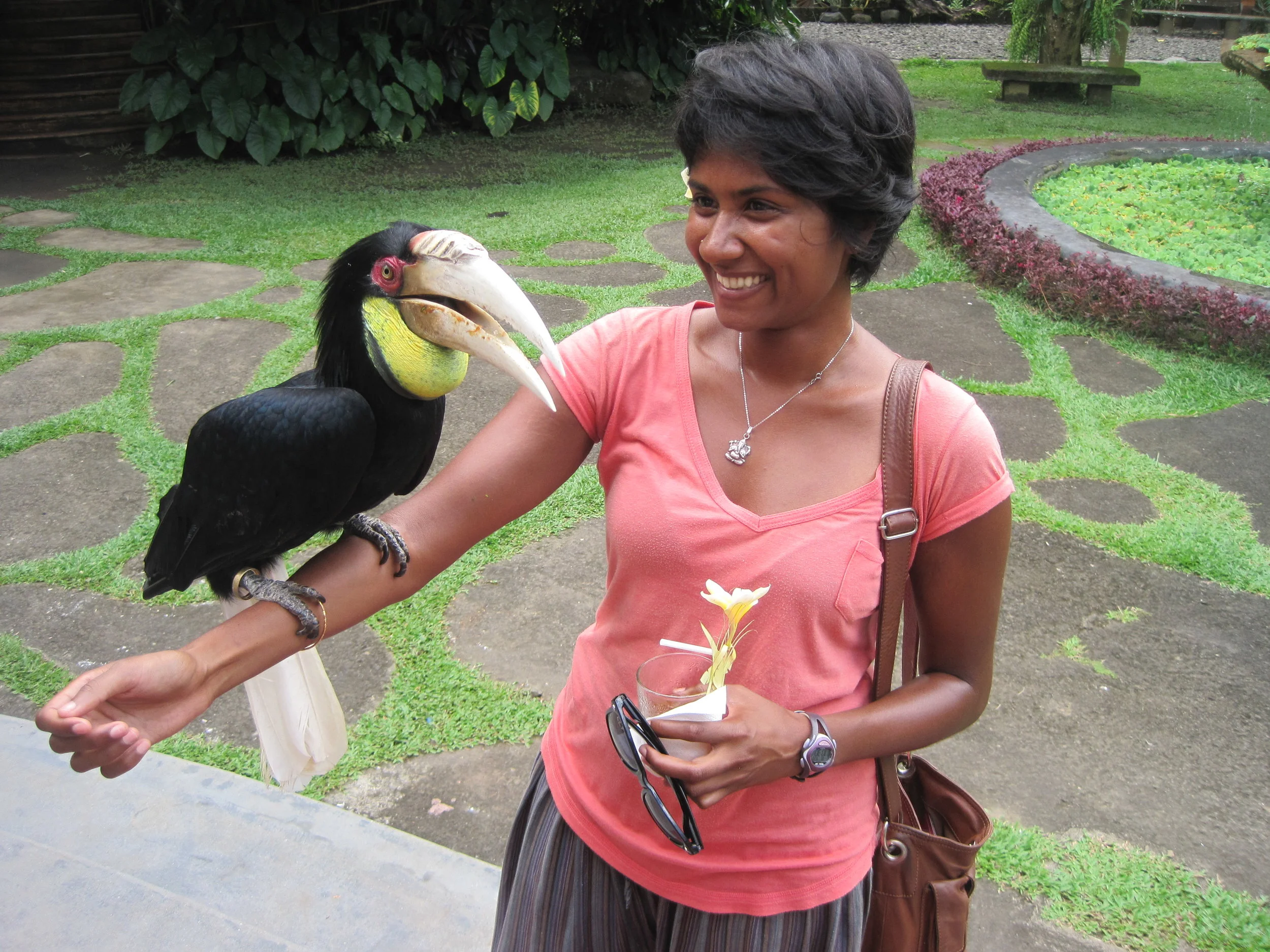
The locals are always curious towards me because though I carry the resemblance of an Indian, they are not sure where I’ve come from…
The locals are always curious towards me because though I carry the resemblance of an Indian, they are not sure where I’ve come from. I am like a puzzle for them and only a few have deciphered my true origin: Sri Lankan. I am darker than average and my features are indistinguishable even considering the myriad of ethnicities that exist in most places that I visited. I get stared at all the time by men, women and children alike. Sometimes they ask where I am from and the answer I have now become accustomed to giving is “Canadian but originally Sri Lankan”. This seems to satisfy their interest until they realize that I am travelling alone which sparks a series of questions that follow. To be travelling alone as a female and having the opportunity to do so for such a great length of time is bewildering. They are always keen to help and never have I felt pressured or uncomfortable. I feel confident and safe, no matter where I am or the context I find myself in. Looking like what I refer to as a domestic tourist definitely has its advantages. More than often I can avoid the foreigner rate. I can eat with my hand, which makes the cuisine taste like what it really should. Best of all, I’ve got the immediate shoo-in with the locals! I also soon found that there are many advantages of being a single, female traveler. On a few occasions I found myself on the back of a motorbike being whisked from one sight or attraction to the next with nothing asked in return except for my company and conversation. They are eager to know where I come from and where I am going. The talk is never shallow. It is insightful and interesting and no matter the differences, there is never judgment but always understanding. One thing remains constant – I am growing. I’ve changed by not changing at all.

EVEREST BASE CAMP TREK – NEPAL
I took the Mars bar out of my armpit, where it had remained all night, and anxiously peeled back the wrapping. Still frozen…
I took the Mars bar out of my armpit, where it had remained all night, and anxiously peeled back the wrapping. Still frozen.
For many, the Everest Base Camp trek is a trip of a lifetime. The historic route to the base of the world’s highest mountain has been drawing in thousands of trekkers for almost half a century. From Dudhkoshi Valley to Namche, and Thyanboche monastery to Khumbu Glacier, the 18-day hike culminates with Everest Base Camp and nearby Kala Pathar peak with its spectacular views of Everest. A friend who had climbed Ama Dablam advised: Don’t rush it. Rest days are imperative to enjoying a high-altitude trek. In this respect, World Expeditions was a good choice - private campsites, three hearty meals a day, experienced porters and a deeply knowledgeable guide.
The first two days were spent in bustling Kathmandu. Visits to the Swayambhunath and Pashupatinath temples revealed unchanged rituals. In touristy Thamel the group dodged tiger balm sellers and bought trekking gear that had been forgotten in the packing scramble. Kathmandu’s backstreets are its real charm, exposing hidden temples and hobbit-sized teashops. The Nepalese are Hindus in ritual and Buddhists in practice. They speak from their hearts and are friends upon introduction. Even in the chaos that is Kathmandu, my memory of the city is of calm and smiling faces.
Lukla serves as the starting point for the EBC trek and the flight there is an adventure in its own right. The airstrip was built by Sir Edmund Hillary to service the Everest Region when he began his work of building schools and hospitals for the Sherpa people. Compared to the standard 5,500 m long and 80 m wide runway, Lukla is unusually short and slim at 450 m long and 20 m wide. Built on a steep 12% incline, it has a cliff at one end and a sheer drop off the other. Landing and taking off leaves no room for error and are stomach dropping, palm sweat inducing experiences.
"No hurry, chicken curry” was the mantra of Mani Raj, the guide. A slow and steady pace is just as crucial as rest days. Beyond guiding, Mani played the role of doctor, father and friend. He dispensed medication and counsel on everything from taking care of blisters, "tape with moleskin, keep socks dry", to altitude sickness, "remember no hurry, chicken curry… take this Diamox". Mani evolved from being helpful at the start to a nurturer once we started trekking and by the end, he was Yoda.
Goshi met the group in Lukla after having walked two days from his village, leaving his wife and three children at home. He and the other porters were enviably tough, breezing through the days with a thin shirt under a fake Northface jacket and well-worn boots picked up second hand. It was guilt-inducing to see some of the tasks they did. Carrying 60 lbs of kit bags on their heads, they ran ahead to prepare camp and wait for us with hot wash water and snacks. In a place far from first world comforts, these simple offerings became luxuries. It got harder to watch them work in higher altitudes and colder temperatures. Stripped of energy from the day’s walk, there was nothing left to do but crawl into my tent. Lying in my sleeping bag, I listened guiltily to the hurried footsteps around the camp over the strong, Himalayan winds.
Mornings dawned with something novel; a bridge crossing over the icy waters of the Bhote Koshis River or watching an expedition group summit Pumori. The day would start around 6am to the call of “Kala Chia”. It was a struggle to get out of a warm sleeping bag and unzip the tent so Goshi could hand in a steaming cup of black tea and a bowl of warm water for “washy washy”. By lunchtime, the two-hour break was welcome – it meant resting outdoors during the warmest part of the day. The afternoon walk was little shorter and reaching camp with enough time before dinner left time to explore the surrounding area and villages. A woman washed her clothes in the river as her child stood by her, shivering in the icy water. A farmer led his yaks to a market, their purple tongues wagging as they trudged on.
Food was a frequent topic of conversation. It was therapeutic to talk about favourite dishes that were missed. One of the Australian trekkers carried a squeezable tube of Vegemite to breakfast every morning. She found comfort daily in that small taste of home. The cook realized that the livelihood of the group depended on a satisfying meal. He was limited by a tiny kerosene stove and very few ingredients but still, the chapathis were fluffy and the curries flavourful. For this, he earned admiration and respect.
Winding through Sherpa villages and past monasteries, the trek starts on a high note. From a distance, the peaks make for a silent and seductive backdrop. It was a magic show - a cloud would shift, the sky would open and a peak would materialize. We would stop and stare quizzically before it would vanish into the sky as quickly as it appeared. And the show went on.
As the gateway to the Himalayas, Namche Bazaar is a major stop-off point for trekkers. The village is located on a mountain slope and at 3,500 m, it is a grueling 3 to 4 hours climb to reach - kind of like half a day on a stair climber. The colder temperature in Namche is a preview of what is to come. It is the last opportunity to use the Internet and most important, it is the first chance to possibly suffer from altitude sickness. Therefore, it is advisable to spend at least two nights to acclimatize. My most enjoyable day started with a short walk up a hill to the best vista stretching across the village, followed by a strudel at a German bakery. Then I wrote my sister to tell her I was alive, drinking strong coffee, and regretting not bringing more socks.
Past Namche, the vegetation disappears and yaks are found in abundance. Heavy built animals weighing up to 2000lbs, yaks do not thrive at lower altitudes below the tree line. Their shaggy physique and the sound of their cowbells were a reminder of the vast and empty space of the Dhulga Morraine. The moraine runs along the Khumbu Glacier and towards the settlement of Gorak Shep, the final campsite of the trek. Completely exposed, the temperatures significantly drop. Hygiene became a problem, exposing a bare backside to -15C becomes a tug of will between biological urgency and basic survival. At night the temperature plummeted further and I slept cradling a bottle of hot water between my legs. Only my face was exposed as sheer exhaustion from the day enveloped into sleep.
Gaining elevation created more challenges. Appetites disappeared, breathing was laborious and the freezing temperatures prolonged the simplest of tasks. Tying shoelaces became a burden. Applying toothpaste demanded focus. Endless research given on high-altitude trekking does not prepare for these unexpected frustrations. It helped that we could voice our complaints with one another and the daily banter was a good distraction from the problems. The journey started with a collection of strangers from different countries, lifestyles, and reasons for doing the trek. Adam was doing some soul searching. Ben and Claire were on their honeymoon. Alison wanted to prove that as a single mom at age 45, she still had it in her. Regardless of individual purpose, trekking in the Himalayas forged a family.
The crew worked hard to keep spirits high in the midst of the final slog. Since most could not speak English, they performed card tricks and had Mani translate their jokes. More than anything, they wanted to get a laugh. Shyly covering their giggles, they insisted that there is a brothel at base camp during the expedition season in May. This is actually a fact but regardless, it had us howling.
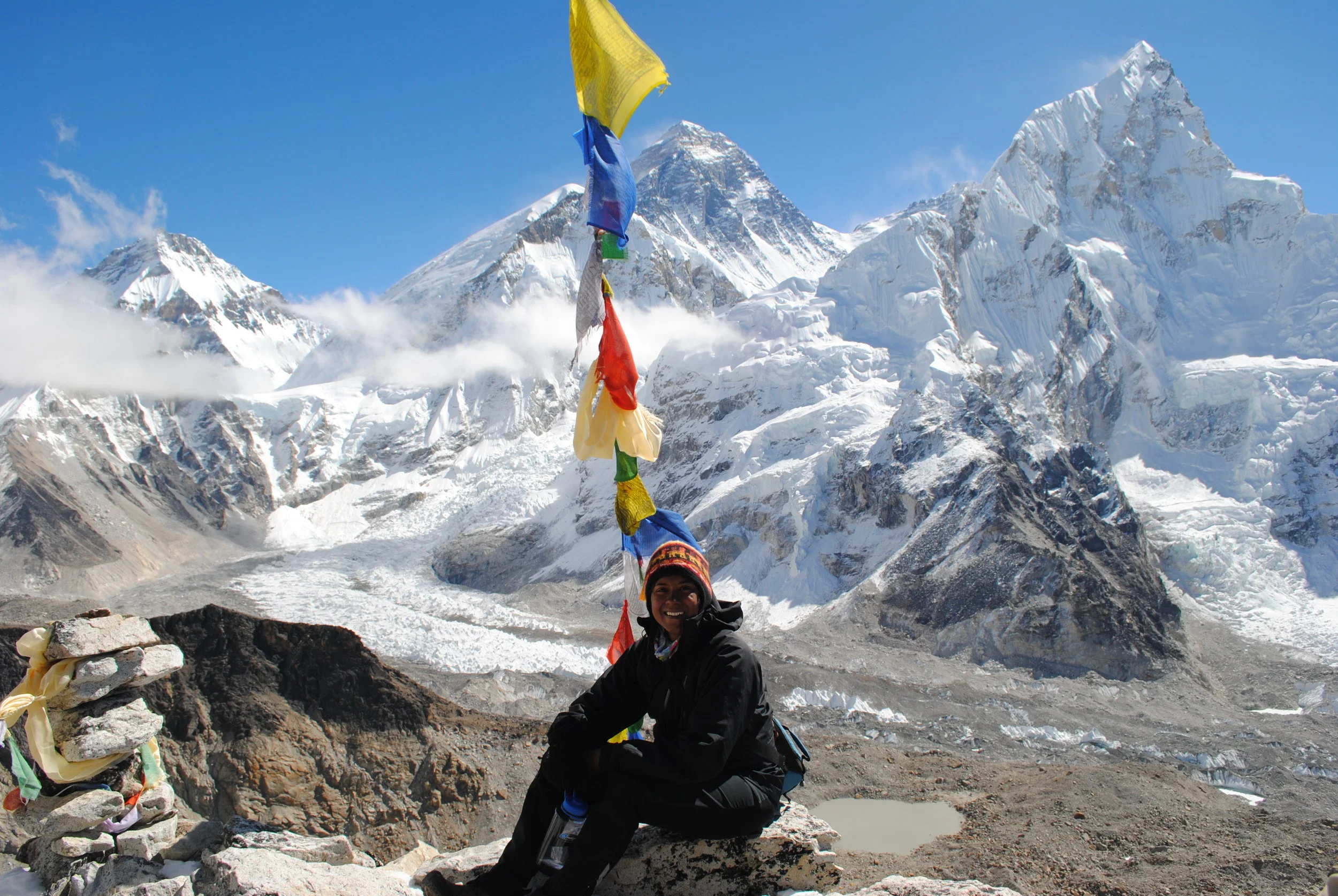
Getting to base camp turned out to be all about the bragging rights. It was a desolate, rocky scene void of any tents or explorers. It was hard to imagine where the brothel would be set up. The climax of the EBC trek is actually in the views of Everest and its surrounding mountain range from atop Kala Pattar, a nearby hill (5545m). Below, the Khumbu Glacier snakes towards the icefall and the Western Crown. Straight ahead, the rocky skyline is punctuated by the same Ama Dablam seen just nights before, when a full moon glowed over the most beautiful mountain I’ve ever seen.
Gorak Shep was the original Everest Base Camp and it has one basic shop. Among other things, it sells Mars bars - the perfect treat after a cold, tiring day racked with altitude sickness. The chocolate was rock hard and impossible to eat, so it was stuffed into my armpit before bed. I so badly wanted that Mars bar for breakfast. I had soggy oatmeal instead. It took three days and warmer altitude for it to get soft enough to eat. But it was a sweet reminder that no worthwhile experience can be rushed – especially on the roof of the world.

PAINTING IN THE GARDENS OF ARMA MUSEUM – BALI, INDONESIA
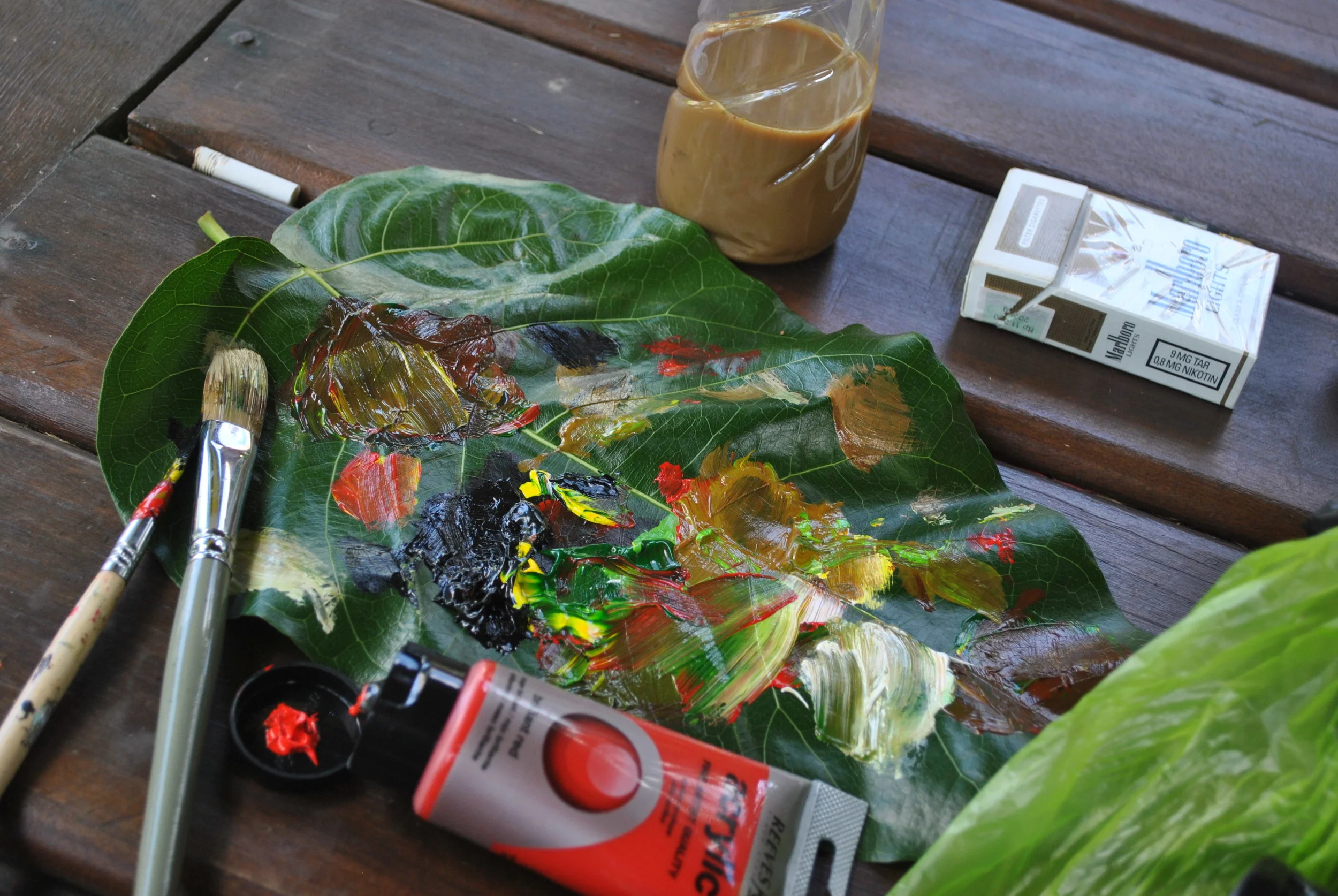
I snapped a very large, waxy leaf off a branch and decided it would make do as a palette…
I snapped a very large, waxy leaf off a branch and decided it would make do as a palette. I arranged the tubes of acrylic paint neatly in a row and propped up the canvas against one of the posts that held up the thatched roof above me. I sat down, crossed my legs and looked beyond the canvas to the rich paddy fields and the palm trees that hovered over them as they snaked off in to the distance. The smell of freshly cut grass and blooming flowers perfumed the air and the birds chirped as if to provide melody to this majestic setting.
I was in the gardens of an art museum. I spent the morning walking through its rooms, admiring the various styles of Balinese paintings. There were only a handful of visitors and it felt like I had the entire place to myself - each gallery a shrine where I could pay solitary devotion to the passionate works of great minds. To find inspiration in a place like this was a natural reaction of merely being present. This is why I had decided to go out and purchase art supplies so that I could return and find a place in the gardens to practice my own desire for painting. Since I started my travels, I was writing on a daily basis and found it to be a necessary outlet for all the emotions that I was garnering. To express my emotions with a different medium was refreshing and I found that with every stroke of my brush, I was releasing an array of feelings that I was unable to relay through written word.
I walked back to my hostel later that evening having felt like I had meditated for hours. My hands and clothes were covered in paint, my stomach churned with hunger and I was charged with a renewed sense of self-awareness. The owner of the hostel approached me as I entered the guesthouse and noticed my disheveled appearance. “So, you’re an artist?”, he asked interested. I was flattered by this and responded candidly, “Not really - I’m just inspired”.

HORSEBACK RIDING ON A VOLCANIC CRATER – MT.BROMO, INDONESIA
We trudged along the ashy floors of the Mt.Bromo caldera, scoffing at the others who mounted guided horses to get to the crater a short distance away…
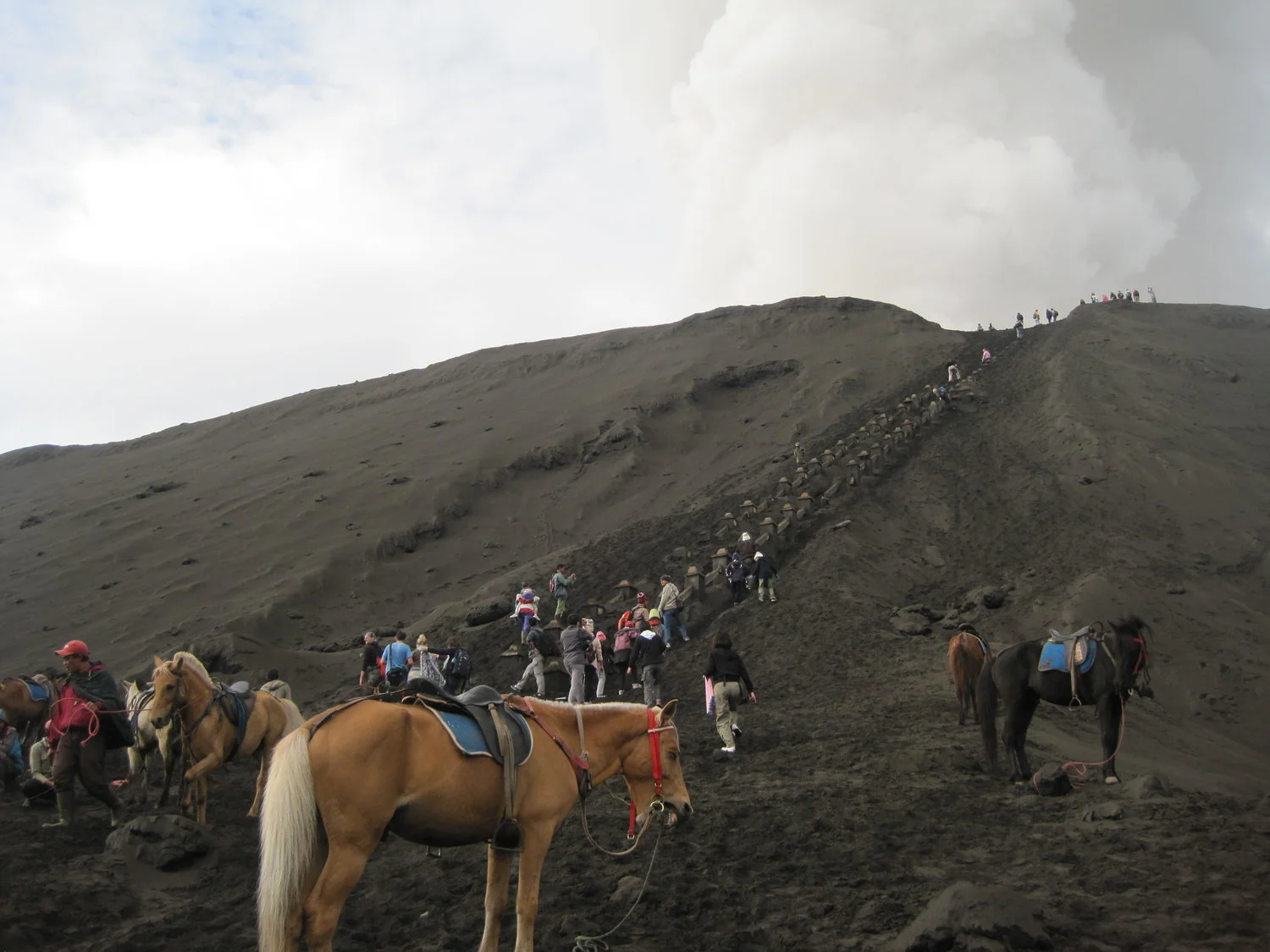
We trudged along the ashy floors of the Mt.Bromo caldera, scoffing at the others who mounted guided horses to get to the crater a short distance away. Admittedly, the thought of riding along the caldera on horseback looked pretty novel and fun but I couldn’t get past the fact that it was such an obvious tourist-trap. The sandy ground beneath us was demanding a lot more effort than we had anticipated and the huff-factor was making the walk quite challenging. Along with our eagerness to get up to the crater rim, we decided to finally give in to the touts and their magnificent beasts for hire. I mounted the horse after reluctantly settling on an inflated price - apparently, riding a horse on a caldera of one of the biggest volcanoes in Indonesia does not come cheap.
It was still morning and the vast plain, the Sea of Sand, glowed all around us. The view was even more magnificent when we finally got to the crater’s rim after scrambling up on hands and knees. A straight drop lead to the mouth of the crater from which smoke bellowed out and made a deafening sound. As I watched the clouds in such close proximity, forcefully expanding upwards, my expectations of what I would see at this crater’s edge was blown away. This mountain was alive; breathing heavily and making its vitality known. We sat on the edge, as humbled visitors, peering somewhat hesitantly in to the darkness from which the clouds came. I glanced over at the other onlookers and then to my friends who stood next to me. Their faces shared the same shocked expression and as our eyes met, we all started to giggle just as unexpectedly as our current situation had found us. By the time I had grasped the reigns of my horse and looked out onto the surreal vista, I thought about how I would look back on this experience. I made a grave realization at that very moment. Years from now, I will be more disappointed by the things I didn’t do than by the ones I did do.


BATIK ARTISTS AND AN ART PURCHASE – YOGJAKARTA, INDONESIA
I knew I was trapped when, after eyeing me the whole evening, he finally came over and sat down at my table…
I knew I was trapped when, after eyeing me the whole evening, he finally came over and sat down at my table. We spoke briefly about my first impressions of Jogjakarta and he was kind enough to educate me on the cultural importance of the city as the center of Javanese arts and academics. I mentioned that I was impressed with the city’s ample offerings of batik as an art form. When I think of batik, I remember it as the nightgowns that my grandmother used to wear, the shirts adorned by drunk uncles at parties or its tacky use as colourful bedsheets and tablecloths. I can’t seem to take it seriously because I had never admired it in a respectable or artistic context. So naturally, I was surprised when I learned that traditional batik, especially from Jogyakarta, has notable meanings rooted to the Javanese conceptualization of the universe. I was eager to learn more and my companion was pleased with my inquisitiveness. He mentioned that his friend was a batik artist and had a studio just around the corner if I was so inclined to see it. Before accepting the offer, I promised myself that I wouldn’t be forced in to buying anything. Art, books and maps make up for my ultimate retail weakness and is more pronounced while I’m traveling. Furthermore, I find it particularly hard to refuse any purchase of this nature especially if I have my heart set on the item from the very beginning.
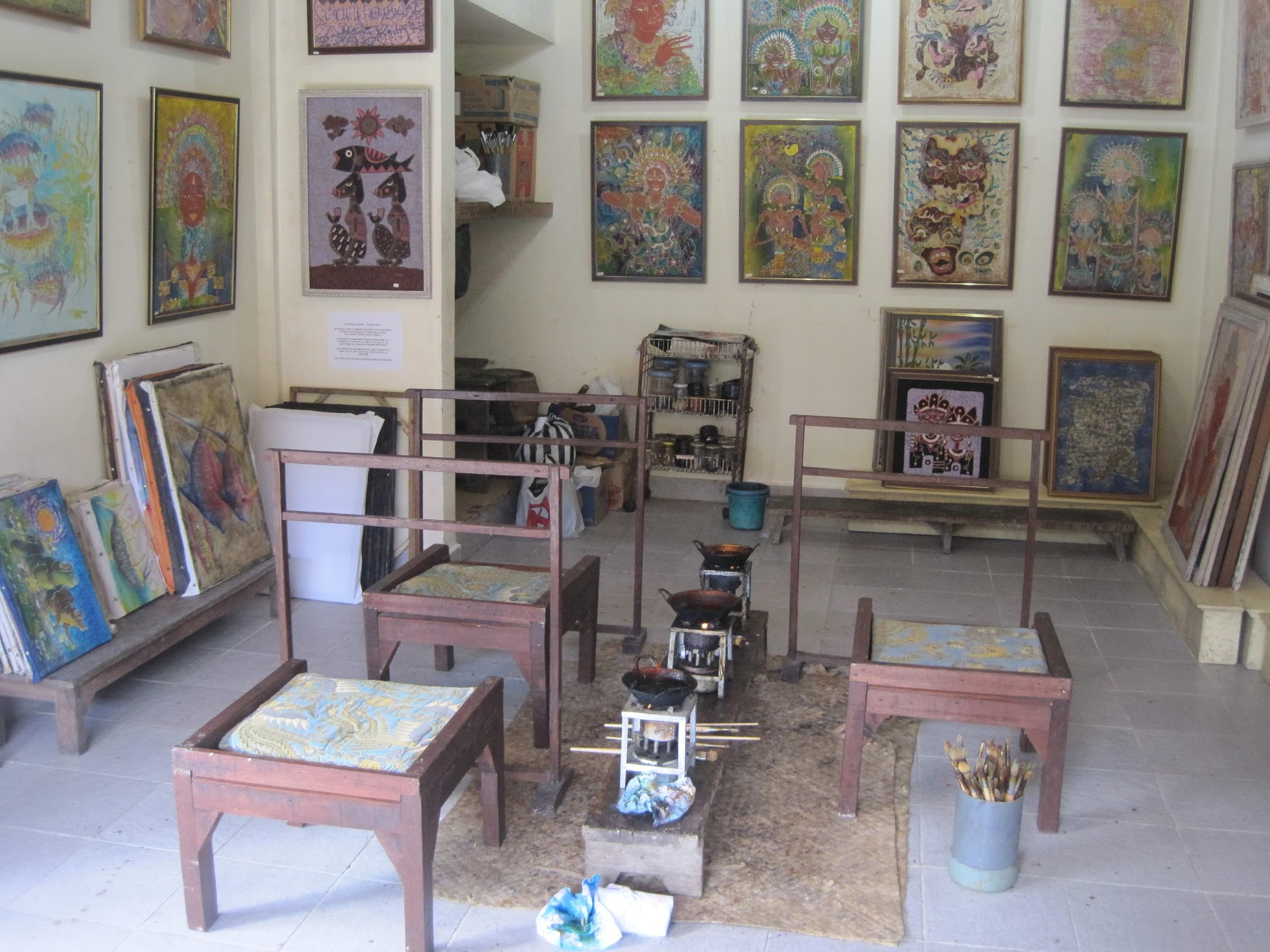
The studio was small and bright. A single couch and coffee table sat in the middle and surrounding them were countless batik paintings, hung on the wall and arranged against each other on the floor. I had entered a fish bowl of bright coral and mysterious objects swam around me, exposed by the natural light that radiated through the large windows. I was drowning yet I didn’t want to come up for air. The artist and I were left by ourselves and I paced from one painting to the other while he lit a cigarette. He spoke about his work and the others that made the group of artists to which he belonged. Every time I paused at a piece, he explained the inspiration for it and the technical aspects of its batik production. My eyes finally fell on a swirling heap of colours that covered a reasonably sized canvas. I was drawn in immediately and I stood for quite a while watching the subject matter - three fishes forming a circle, creating a vivacious sense of movement and harmony. The artist explained that the fish were native to the island of Bali and each represented harmony, good luck and long life. The fish needed to come home with me and I could tell that he sensed this desire. Instead of pursuing the sale and pushing me out the door, he invited me to sit, have a cup of coffee, join him in a smoke and meditate on the work before I made my final decision.
The Balinese coffee was full of body, the cigarette settled my anxiousness, and the conversation settled on his life experiences. He spent a few years at an art school in Germany under the tutelage of a well known artist who frequently visited Indonesia for inspiration. It was the 70’s and the times left much to explore for a young and impressionable artist from Jogjakarta. Unfortunately, he faltered when he started using drugs and it lead to an addiction. His art career in Germany came to an abrupt halt and he came back home to pursue his ambition but still could not rid the habit that had engrossed him. At the time of our conversation, he’d been clean for two years. He was divorced and had three children. He spoke with his heart; his voice was clear with verity and he eyes painted the anguish of what he uttered. As I put out my cigarette and drained the rest of my coffee,I knew I would walk out of his studio with more than just a painting.
Forever in my memory, I would have the past few hours of a sunny afternoon in Jogjakarta, sitting with an artist in his studio and talking candidly of art, life, love and loss. He stopped me as I was about to leave and reached in to a pile of framed paintings and gifted me with a beautiful piece of a Balinese dancer. “This is of my wife when I first laid eyes on her at a dance festival...she danced with so much expression”. He had captured her energy accurately both in the way he painted her gestures and the colours he used. I noticed an unnaturally obvious feature of the painting, slightly absurd but still evocative, and asked him curiously why she had two heads. “Oh that”, he smirked before continuing. “I was high on ‘shrooms and that’s just how I saw her”.

SUNSETS ON THE MEKONG – DON DET ISLANDS, LAOS
I imagined I would only stay a few days. In fact, I scribbled “2-3 days” next to Don Det Islands on my list of places to visit…
I imagined I would only stay a few days. In fact, I scribbled “2-3 days” next to Don Det Islands on my list of places to visit. It was my first stop in Laos and I had an ambitious plan of seeing as much of the country as I possibly could in a month. I befriended a Swedish girl on the bus upon the long and strenuous border crossing from Cambodia. Similar to my other introductions to travelers on varied modes of transportation, we were instantly friends and it was assumed we would share accommodation to save money. We found a riverside shack within a matter of minutes after our boat pushed on to shore.
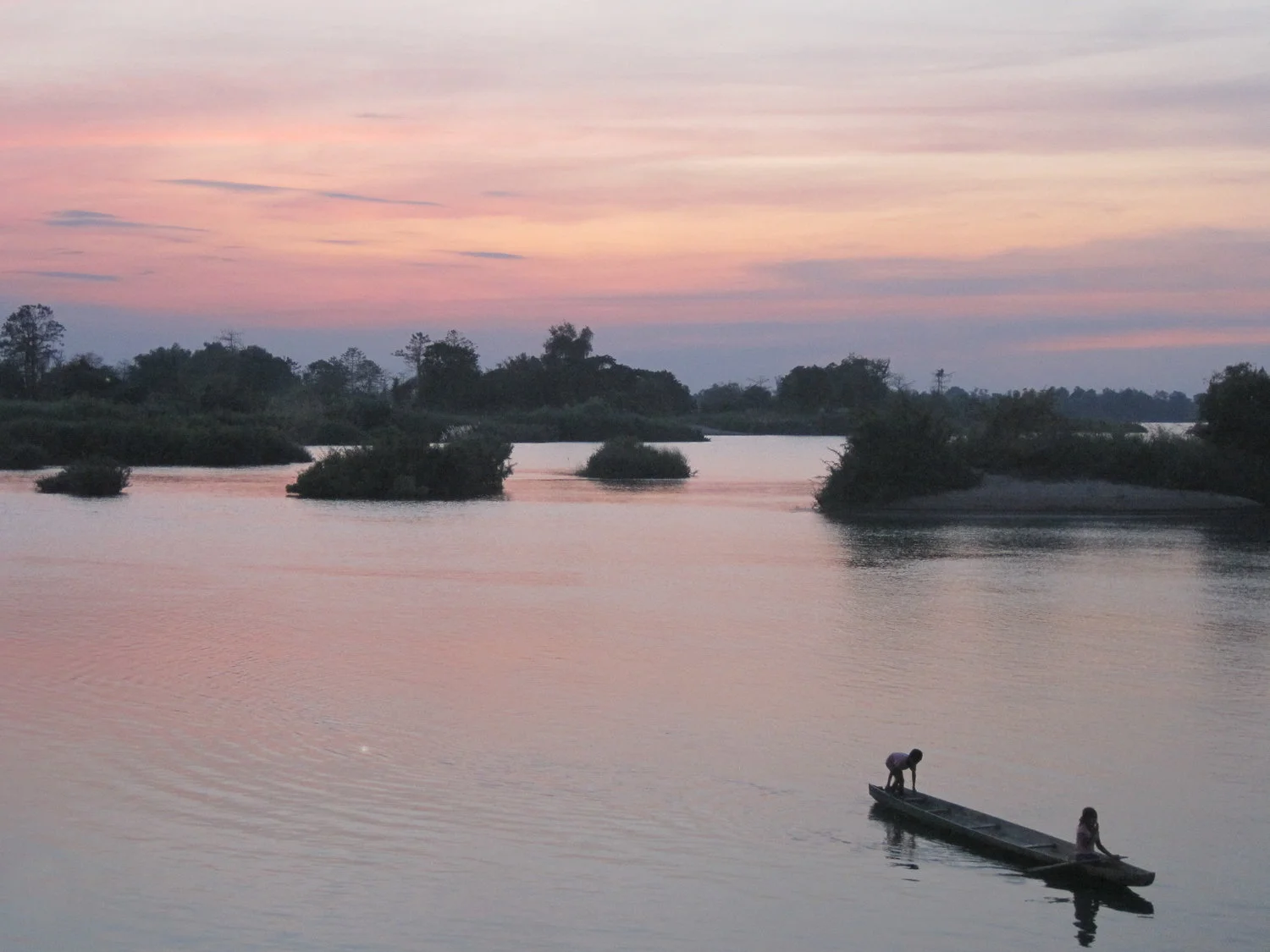
The room had enough space to fit two beds comfortably and just outside, from our patio, we had a fantastic view of the river below and two hammocks swung idly in the breeze behind us. I couldn’t ask for more. I was also sure that I would be bored to death by the second day and have to leave my new friend to pursue more stimulating activities and unique destinations. I had once read an article about the Mekong and apart from some general information I specifically recall the author noting how spectacular the sunsets are on the river. I remember thinking how contrived that description was and how one can boast of beautiful sunsets anywhere in this great world of ours. But while I lay swinging in my hammock as the first day slowly came to an end, I realized that the author was not at all misinformed. I soon found that there was great truth to his very generically crafted description. Mothers washed dishes, children frolicked and fishermen drifted in the water. The brilliant colours and exuberant energy of a sunset that beckoned the starry night ahead would suddenly transform this simple village scene by the river.
I experienced many sunsets on my trip; standing upon epic monuments overlooking breathtaking vistas to drinking beers after a day of diving and watching the orange glow of the sky as we rocked gently on the sea. The list goes on but none of those moments come close to conjuring the feelings produced by the sunsets on the Mekong. A sense of peace and calm would surface, time would slow down and I’d be left wanting for nothing else but that moment to last forever. It was a lazy Sunday morning back home with no heralding commitment other than an espresso in the morning. The Mekong delivered this sentiment to me with such ease and as the days passed, I discovered that even beyond points of interest or unique experiences, the feelings that a destination creates is enough to prolong any stay. I bade farewell to my friend seven days later and was delighted in knowing that the serenity of the Don Det Islands and the beauty of the Mekong and its sunsets served as a perfect introduction to Laos. It taught me one of first lessons I gained during the onset of my travels - a destination is more than just a new place but a new way of seeing things.


CYCLING TOWARDS THE SUNSET – OLD BAGAN, MYANMAR
By the time we had finished dinner, the sun had set and darkness had encroached around us…
By the time we had finished dinner, the sun had set and darkness had encroached around us. I was in the company of a new friend who I had met days earlier in Mandalay and our paths crossed again in Bagan. Making friends whilst on the road and frequently bumping in to them at a different time and destination is a lovely thing and is indicative of how small the world of travellers really is. We had spent a lovely day together, riding around on our bicycles, maneuvering on dusty roads from one temple to another.
As we were leaving the open-air restaurant, in the centre of Old Bagan, and about to head our separate ways to our own hostels I realized that I didn’t have a headlight - nor did my bicycle. Ben took notice of this and insisted that I take his. Although we had not known each other a long time, he seemed quite worried about my safety and tried reasoning with me after I refused his kind offer. I knew that my chances of arriving safely at my hostel, in New Bagan and about a half hour ride away, would be assured with the security of a night light leading the way. I’m sure my refusal was based on the confidence or (to be more candid), the cockiness that had become quite prominent in my character after traveling alone for several months. I had become accustomed to dealing with situations and problems on my own without much aid or having to seek out help from others. So off I went, without the assistance of any kind of illumination, down the main stretch of road headed towards my hostel. Suddenly I had this very ideal and romanticized thought that the full moon would emerge among the skyline of stupas dotted in the distance and set aglow the road before me.
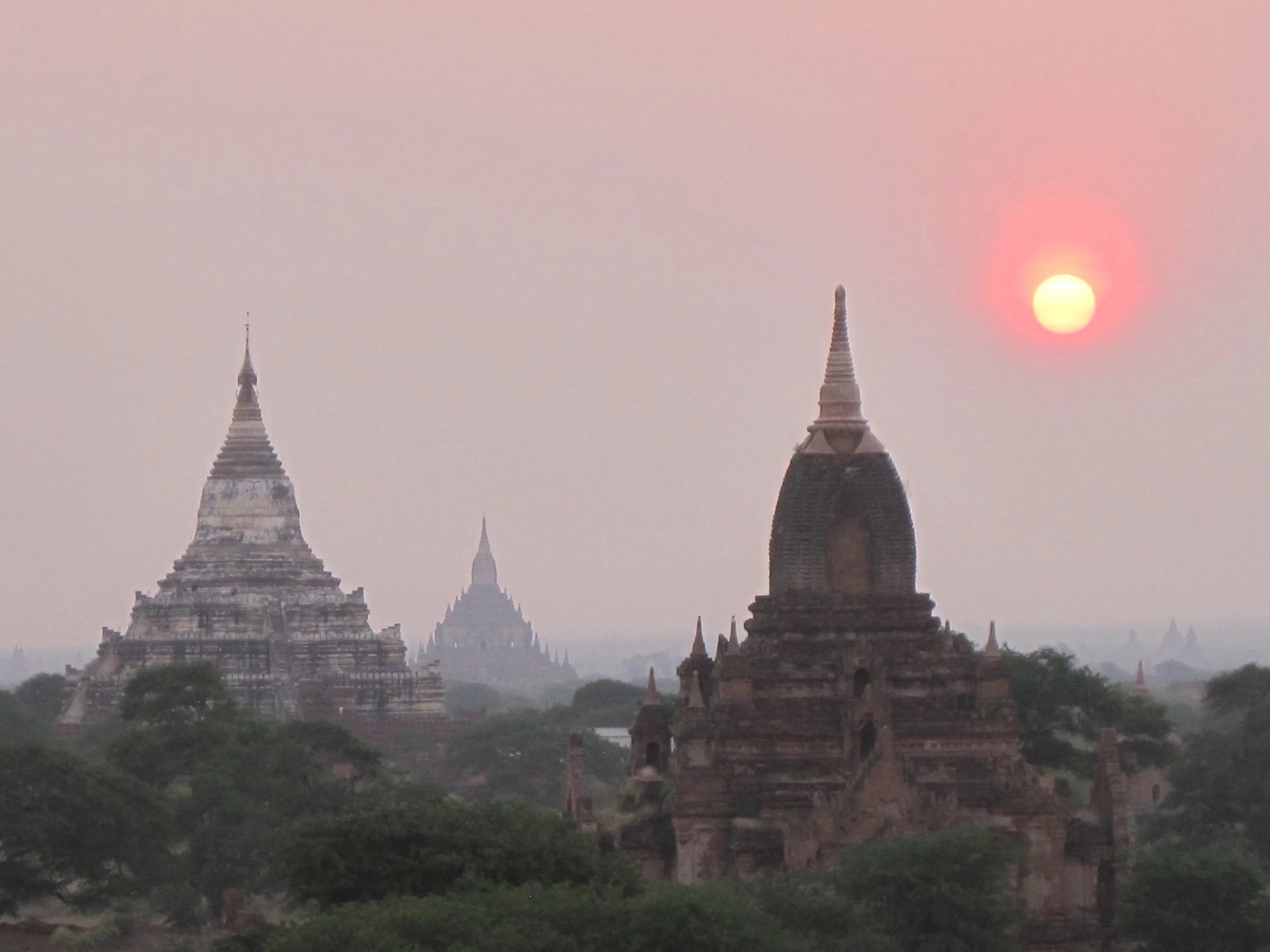
I realize now that if this had indeed happened, I wouldn’t recall this memory as I fondly as I do presently. Instead, the only light produced was from the cars and motorbikes that sped towards me only to swerve mere meters before realizing I was there or those that overtook me in a great hurry. When these motorists did make themselves present, I would speed up to cover as much distance possible while having the aid of their lights. But this would only last moments. As darkness once again took control of the situation, I would slow down, pedaling to the feel of the gravel below me and hoping that I wouldn’t fall victim to a pothole (which were large and numerous) or the ditch on the side of the road. Nothing about this situation was ideal. I tried desperately to distract my thoughts. I reminded myself of where I was - an ancient city, the first capital of the Burmese Empire and the site of numerous, beautiful stupas all built between the 11th and 13th century*. To see these ruins and be in their presence was a long living ambition of mine. As I looked in to the distance, I could see the vivid profile of these monuments, all of them unique in their size and structure. Even though I was overwhelmed with a heightened sense of panic, I could still depend on my brief glances of these ruins to produce moments of calm.
About half way through my journey, a motorist passed me and then immediately slowed down and waited as I caught up. He started questioning me on why I was out so late and where I was going. I panted out the answers and while trying to remain focused on the dangerous task at hand, I was becoming increasingly annoyed. I did find some amusement in the irony of the situation - the only motorist who cared enough to stop and escort me didn’t have a working headlight! I resented myself for thinking that his presence and my forced reception would have been more worthwhile if he was at least able to light the way. He did however provide a sense of security that I had not felt in a very long time and for this I was grateful. We rode along in the darkness and in silence - two strangers from two different worlds in

DEFINING HAPPINESS FROM KALAW TO INLE - MYANMAR
It must have been about 5am when the monks started their chanting…
It must have been about 5am when the monks started their chanting. They sat just outside my sleeping area which was enclosed by large, hanging sheets. The light that radiated from the candles cast shadows of the monks’ bodies on the sheets and the illuminations danced as the light flickered. It was a surreal way to wake from sleep and begin the day, even though I had been up for most of the night with a high fever and unforgivable body pains. I had been sweating profusely through my clothes and found only minor solace in the fetal position. I welcomed the chanting as not only a spiritual awakening but also having delivered the end of a miserable and disturbed night.
I cursed myself for not having been better prepared for my arrival into Kalaw two days earlier. It was about 3 am when the bus had reached Kalaw and as I stepped off I knew immediately that I wasn’t nearly prepared for how cold it was. I made my way to the hostel with which I had reservations, only to find it closed. I found a teashop on the main stretch of road and as I cradled my cup of tea, I waited desperately for the sun to show its presence. I had arranged a three day trek with a local guide to Inle Lake, starting in Kalaw, with overnight stays in a village and a monastery, the latter of which I was most excited for. My guide was a fast walker and we covered a lot of ground in short time but this left plenty of downtime at the end of the day which I enjoyed thoroughly, especially at the village. “Are you happy?” one of the girls from the village asked animatedly as we sat together watching the sunset.
I was initially taken aback by this somewhat loaded question. Normally, such an inquiry was posed by a loved one or someone who was very dear to me and usually in line with a serious circumstance that warranted such a question. I wasn’t sure if it was just one of the English phrases she had learned to say or if her curiosity about my happiness was as lighthearted as she made it out to be. Either way, she had reminded me of a feeling that been vigorously bubbling within me and now suddenly exposed with a single question. “Yes! I am happy”, I responded cheerfully, haven’t being this sure of myself about anything in a very long time.
I was reminded of it again as I sat huddled against the monastery walls listening to the monks, under layers of clothing and blankets. My fever had dropped slightly but I was still feeling nauseous and weak. I was indeed in a dire state but as I stared at the silhouettes of the monks carved in the darkness, rocking back and forth to the echoing sounds of their own prayer, I was certain of my happiness and I wanted nothing more than to be exactly where I was. This wasn’t a happiness that would remain only moments before fleeing - it was grounded in my knowing that everyday I was experiencing something for the first time and nothing was so familiar that it was taken for granted.


TEASHOP CULTURE – MYANMAR
My visits to the teashops in Myanmar always left me with the same impression…
My visits to the teashops in Myanmar always left me with the same impression. The stools and tables were unnecessarily miniature, the little tea cups always left me wanting more and the snacks were all profusely greasy. I more than often felt like an unwanted, foreign giant trying awkwardly to find comfort on a child’s stool as I would tuck my knees under my chin. In order to not draw more attention to myself than necessary, I learned how to order le phet. The milk tea never failed to present itself in a timely manner but with just a few sips it disappeared as quickly as it came. The novelty of the treats in supply subsided quickly as my tolerance for greasy rolls and patties stuffed with other fried ingredients started to wear thin. Yet, as my days in Myanmar started to run out I knew that my daily visit to the teashops is what I would miss the most. More than anything else, these trips were a symbolic representation of my brevity and curiosity of finding comfort and normalcy in something that I practiced so naturally at home but proved itself so foreign in this place. However, finding pleasure from these visits didn’t happen so easily and initially proved to be quite a challenge.
Entering the teashop was always an intimidating affair as heads turned, voices softened and eyes immediately casted on the stranger who had just appeared. If I wasn’t lucky enough to find an empty table, I would have to pull up a chair among a group of still gawking locals and awkwardly flash a smile in the form of a greeting. The owner would usually take pity and not waste time in coming over to see what I wanted. “Le phet” I would anxiously recite, with as much confidence as I could muster. By the time I drained my first cup, the place would return to its normal buzz and as the second was ordered and finished, I would have settled in nicely to the atmosphere wondering why on earth I was so unnerved just minutes before. I knew what to expect with each visit and although I had grown accustomed to this routine, every time I stepped in to a teashop it was as if I was doing so for the first time. It was only after countless of visits and cups of tea that I finally adjusted and gained the emotional security to finally relax and savour the moment, taking full ownership of the experience. As part of the many revelations made on my trip, I started to realize that my journeys and experiences did not carry me far unless while it extended around me it also went an equal distance within my own world. I never would have imagined that the daily ritual of visiting a teashop would be a practice in strengthening my character, opening my heart and widening my perspectives. I didn’t have to go too far. I just had to learn how to sit down, enjoy every cup and watch the world go by.


GETTING MY NOSE PIERCED – CHENNAI, INDIA
This definitely makes the list of head-smacking, “WTF am I doing?!” moments I had on this trip…
This definitely makes the list of head-smacking, “WTF am I doing?!” moments I had on this trip. Upon reaching my parents’ place in Trichy, I mentioned to my mother that I was considering getting a nose ring. Why? I’m not too sure what my reasoning was based on but I thought it would be one or all of the following things: something cool to do in India after which I could say “oh that, yah I got that in India”, my mother has one so it makes sense to continue the tradition, it would make me look like some bad ass who went traveling around Asia for eight months and finally - leaps of faith always helps nurture change.
I wasn’t nearly prepared for my mother’s enthusiasm. She booked me an appointment on the day I arrived in Chennai from a two-week jaunt in Southwest India. Apart from being exhausted, I was completely taken aback. I had just spent 12 hours overnight on a train and my mind really couldn’t comprehend or appreciate how my mother had taken it upon herself to make up my mind for me. We showed up at the jewelry store, picked out the stud and then headed up a few more floors to a sketchy, corner office. There was a little girl getting her ears pierced and wailing in her mother’s arms. Not exactly the sound of reassurance. The whole setup seemed a little too ridiculous to be true. It all took place on the floor of this office and the man who ran the operation looked like he had walked in from the street and got appointed for the task at hand. My North American standards was expecting plush chairs, cleanly dressed professionals, the smell of rubbing alcohol and someone asking me if I wanted tea - this place obviously did not fit the criteria.
With one stern look, my mother pushed me along and prompted me to sit on the floor. I tucked my legs under me and looked at the man for some guidance. He hurriedly swabbed my nose with something that had a faint smell of alcohol and then proceeded to mark a spot for the piercing before handing me a mirror. It didn’t look right and I knew it right away. Seeing that this was to be a permanent and exposed fixture on my face, I was quite critical and wanted it to be absolutely perfect. I could tell he was getting impatient with my uneasiness. My mother and I finally found the spot by our selves and he seemed to be content with it, reaching for the tools spread out before him. I wondered where the piercing gun was and what kind of medieval operation he was running here. Then I heard my father’s voice in response to my own thought, “wait, is he going to pierce the hole with just that needle!?” My mother’s tart answer followed, “yes, just the way I had it done!”. My nervousness and anxiety reached its climax at that moment. It’s moments like this where I find courage in my internal monologue: “I’m here, there’s no turning back, this is what you wanted, stop being dramatic and just do it”. By the time I had finished coaching myself, the deed was done. It took place quickly and the pain was intense but not nearly as horrible as I had imagined. The tears were delayed, rolling furiously down my cheeks and as I wiped them away, the smiling and proud faces of my parents became visible. At that very moment, I wondered where we’d go for lunch - I was starving.
21 WATER BUCKETS OF BLESSINGS – RAMESWARAM, INDIA
We followed a crowd of pilgrims through a maze of corridors…
We followed a crowd of pilgrims through a maze of corridors. They came from all over India; distinctive in the language they spoke, the customs they adhered to, and the state they called home. Just another reason I love India, which I find many Westerners are quietly ignorant of - that one nation is made up of a myriad of peoples and they don’t all speak Hindi and eat butter chicken. Faith, in this context, was the singular and binding element. Our pace was hurried, focused and meditative as we passed countless stone carved pillars of an archaic temple that set the stage for this pilgrimage. Water was drawn from a well with a bucket and as we each stepped forward for our turn, it was poured hurriedly over us. Our hands were clasped in prayer, eyes closed and heads pointed upwards towards the heavens.
Here’s a little background: Rameswaram is hailed as the Varanasi of the south and was noted in the Ramayana epic as the place where Rama worshipped Lord Shiva after winning the war against Ravana. Besides the bathing in Sea of Rameswaram, devotees are required to be blessed by the water from the sacred wells scattered within the temple site. Here I was, within a great mass of pilgrims whose devotional will and purpose so strongly adhered to their own individuality. Although I didn’t share their reverence, I wanted to experience the uniqueness and importance of the ritual and most of all, in some way, try and feel like I belonged. I was participating in a practice rooted in such a rich history with people who appeared so pure and beautiful in their worship. I could hear God echoing in the long and dark corridors, I could see God in the transfixed eyes of the pilgrims, I could feel God in the cold water that poured over me, I could smell God in the air that filled with incense and flowers and I could taste God in the dampness of the aged stones of this ancient temple. And in the aftermath of this experience I had made a profound and personal realization that I wasn’t expecting would have revealed itself so clearly - if God means all these things to me, then I am at peace with my faith and its significance to me.

MEETING THE AUTHOR, DAVID GREGORY ROBERTS – MUMBAI, INDIA
I saw it being read in more languages than I can remember and on various occasions I had travellers recommend it to me with high appraisal…
I saw it being read in more languages than I can remember and on various occasions I had travellers recommend it to me with high appraisal. I felt like I was being pushed to hop on the bandwagon, which almost immediately represented false intentions of my reading the book. Not to mention, the sheer thickness of it required a real commitment, as I would have to consider its weight while traveling. But when I was finally grounded for some time in India and was in search of my next read, I decided it was time to pick it up. It seemed fitting as Shantaram is based on a foreigner’s perspective of living in India and sure enough, I was unable to put it down - damn it, those Goras were right. Roberts has a way of bringing his experience in India to life with a mix of truth, dignity and humour that quickly earned my respect.
When I finally made it to Mumbai, the setting for most part of the book, I was eager to go to Leopold’s Cafe. It was where the author found and defined the relationships with many of the significant characters in the story. Though it was aged and rattled with bullet holes of a recent shooting, the cafe was described so fittingly that when we entered it; I felt like I had been there before. We sat down and sipped on beers while I described the book to my cousin, encouraging her to read it. Behind her I noticed a man sitting at a table a few tables away; long blond hair, heavily-built and eating a sandwich. “Holy shit!” I thought, that guy looks just like Gregory David Roberts! My cousin quickly provided confirmation after Googling his picture on her phone. It was only after our discovery that I started to notice customers walking up to him to sign their book and to chat. I wondered what they were saying to him and what he was really thinking in response. Admittedly, I was a little starstruck and quite shocked in general as I wasn’t expecting at all to see the main character of the book I was currently reading, appear in real life in the very place he repetitively refers to in his book!
After downing a few beers, I finally mustered the courage to go over and present myself as a huge fan. While maneuvering past the clutter of tables that lay between us I was seeking desperately for something to say that would set me apart from all the other ogling fans. So I told him that my cousin refused to believe that he could speak Marathi - the native language of Bombay-ites. He took the bait and defended himself by speaking a few words to her in Marathi. She was shocked and I smirked, hiding my own amazement. We chatted about his next book and I had my cousin take a picture of us. “Let’s make this a photo to remember!”, I playfully suggested as I put my arm around the broad shoulders of this charming protagonist who had come to life before my very eyes.
PARAGLIDING – POKHARA, NEPAL
I try to make it a general rule to avoid all tourist traps…
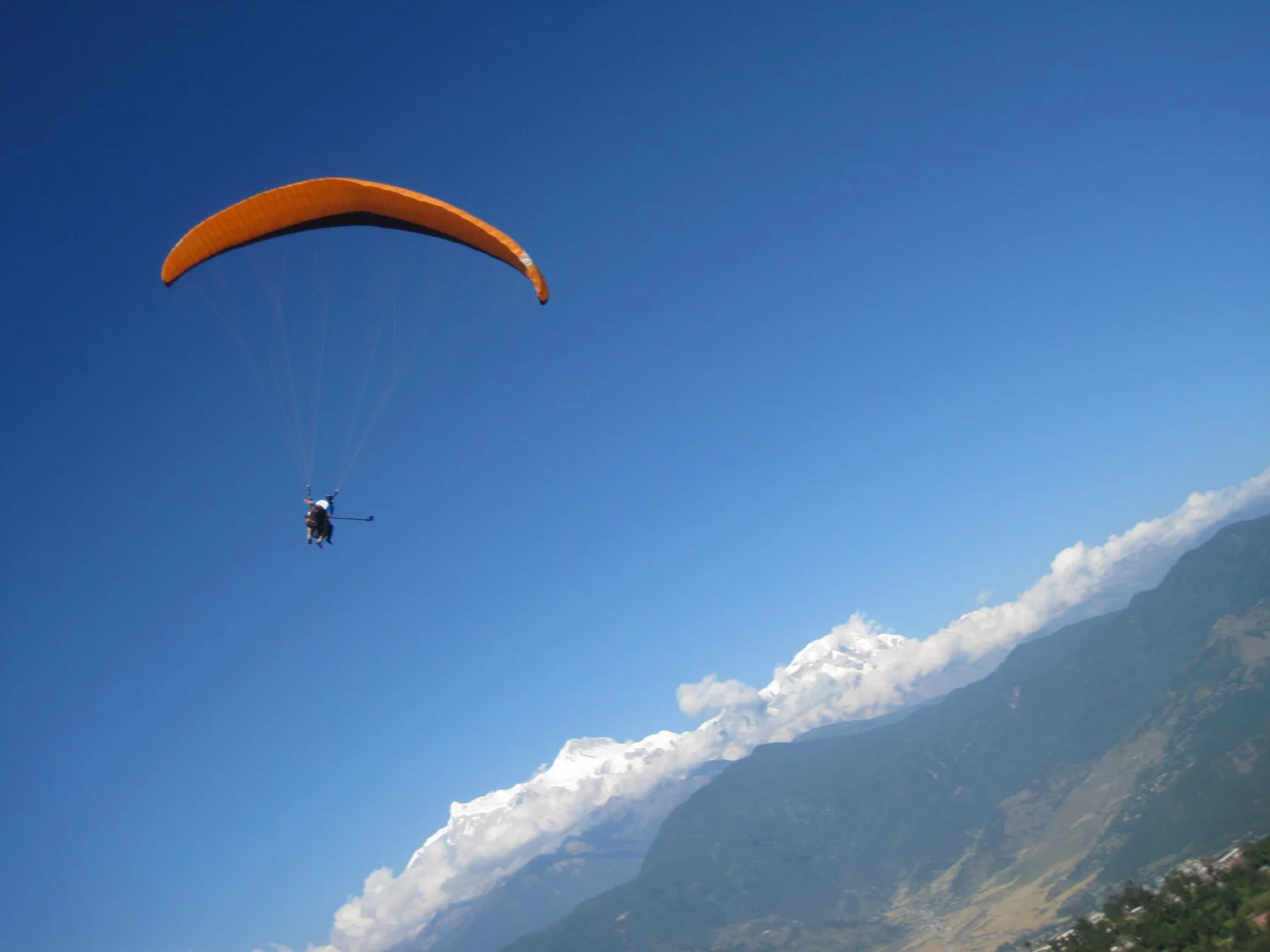
I try to make it a general rule to avoid all tourist traps. But seeing that there’s always an exception to the rule, I feel that I could endure the cash grab if it contributes and is beneficial to my collection of personal travel experiences. So off we went - a bunch of tourists bumping around in the back of a truck headed up a mountain, ready to plunge off it and para-glide over Pokhara’s glittering lakes. I was lucky enough to have picked a clear and magnificent day. As we lifted off, the Annapurna range suddenly came in to view and the mountains provided me with a silent and enticing view that just kept on giving, truly living up to its own and great name - God Of Plenty. With the Himalayan range behind me and Pokhara’s largest lake beneath me, I was indeed flying high. Shadows were casted on rolling rice fields, winding roads seemed distant and chaotic, the water gleamed and speckled and all the while I was cradled by a playful wind. The other parachutes dotted the skyline and I wondered what the other tourists were thinking. Perhaps we shared the same thought in that blissful moment - that maybe it’s sometimes necessary to go with the flow and blend in to the sweaty lineups, aging backpacks and well-thumbed Lonely Planet guidebooks.


THE HEAD WIGGLE – INDIA
It is an art form of the truest expression, wholly necessary to the functioning of the society…
It is an art form of the truest expression, wholly necessary to the functioning of the society. It is the difference between yes and no. It is how deals are made, directions are relayed, orders are given, appreciation is bestowed and dismay is asserted. It is a language in itself and life without the head wiggle is unimaginable. The movement of the figure eight made by the head is so organic to all Indians that I’ve come to believe that it’s genetic. When I am in this nation of head wigglers, I exercise it just as frequently as they all do because when I do, I feel that I am really understood. And for a foreigner, this feeling is priceless.

STREET BBQ LESSONS – KATHMANDU, NEPAL
Raj was overflowing with excitement - he was about to pop my Nepalese BBQ cherry…
Raj was overflowing with excitement - he was about to pop my Nepalese BBQ cherry. Sitting on the back of his motorbike I could see my new friend’s gleaming smile in the rear view mirror. Ever since I expressed my love for BBQ to him, he had been adamant in introducing me to what he dubbed as the best place in all of Kathmandu for grilled meat. “But I must warn you. Its no restaurant, only very dirty place”, he cautiously stated as if to test the validity of my passion for food and how far I’d go to try and experience anything new. I had already proved myself on numerous occasions so I could tell he was confident that I would appreciate whatever it was he was eager to share. We were headed to a joint close to the Kathmandu airport; a hot spot for the locals to chill out after work with drinks and meat - lots of it. As an enthusiastic foodie with a fervour for sampling international cuisine,
I would normally go into detail about the BBQ but I, until this day, have no idea what was being served off the old newspapers that were used to rip the meat off the long, oily skewers. Without any real confirmation from my host, I assumed it was an assortment of everything a goat possibly has to offer of its anatomy. To describe the place as a shack would be an understatement and an insult to all shacks of this world. A drooping tin roof was hoisted up by a few poles and housed a bunch of wooden tables and benches. The workday had let out and the place was packed. Laughter, cigarette smoke and the smell of BBQ (which I find smells the same anywhere in the world, no matter what it is) wafted from the shack. I joked with my friend for not having called ahead to make reservations. We pulled up a bench and sat down - I was ready - or at least I thought I was. The drink order was made and when the mickey of whiskey arrived with a couple of dirty glasses, I started reminiscing about the cold beer that would usually accompany any BBQ endeavour back home. Oh well, bottoms up! The side dishes followed - spoonfuls of pickles, ginger and toasted rice. I secretly wondered what the toothpicks were for. As I looked around I noticed that it was the utensil of choice for picking at the complimentary dishes and heaps of meat.
After a few glasses of the unrefined liquor, great conversation with a friend who speaks better Italian than English (and when he does speak English it sounds like Italian) and finally breaking the seal in the bush behind the shack, I suddenly started to feel the effects of a meat coma. So we got up to leave with bellies full and enough toothpicks to get at all the leftovers wedged in my teeth. I could see the planes take off from the airport in the distance. I was happy I wasn’t on any of them. I wanted to remain and go on having these worthwhile, local experiences even if it meant I’d probably have to endure some minor suffering over the toilet that night.

ANGKOR WAT WITH MY FATHER – CAMBODIA
To realize the dream of seeing Angkor Wat by myself would have been an incredibly fulfilling experience…
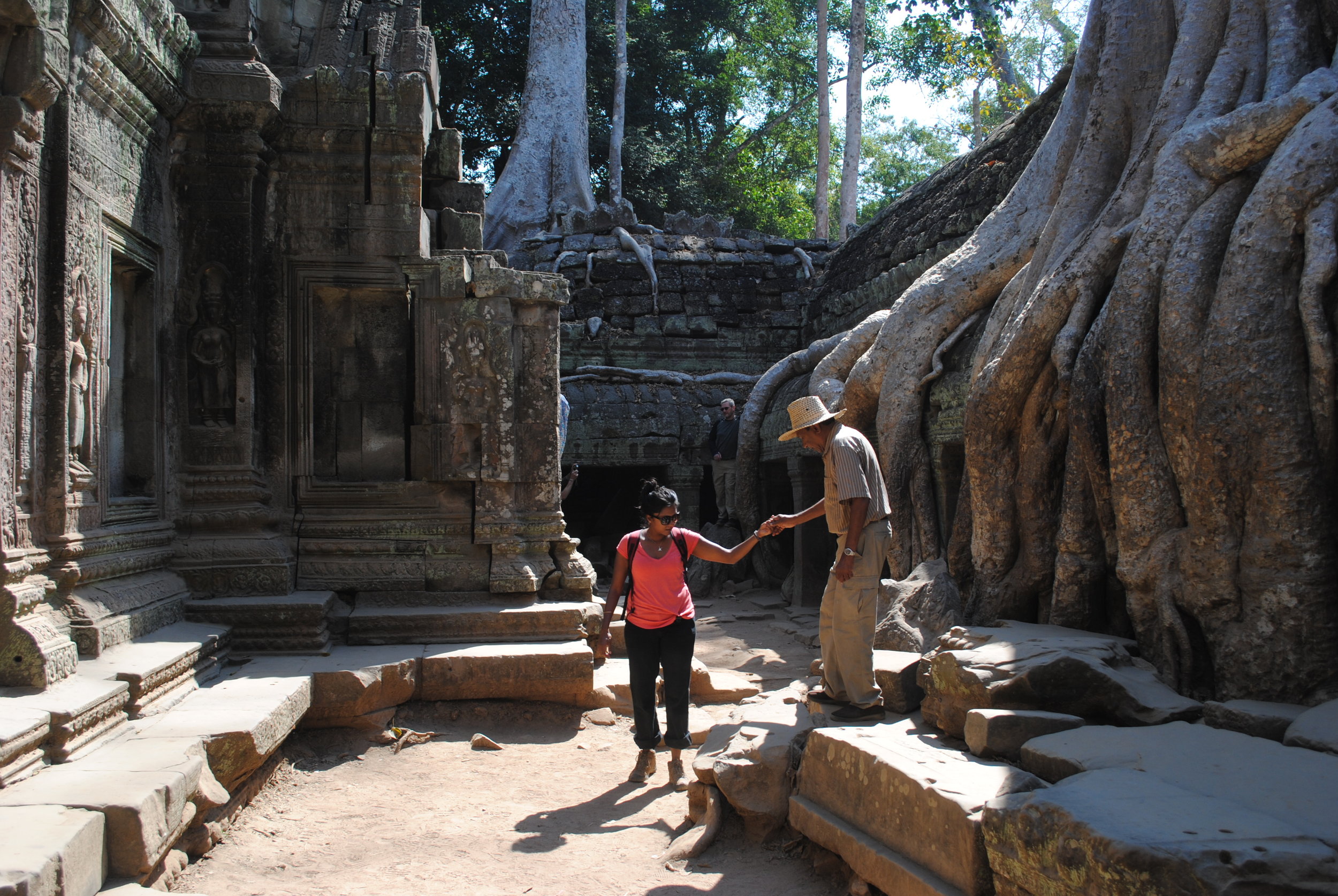
To realize the dream of seeing Angkor Wat by myself would have been an incredibly fulfilling experience. Sharing it with my father was the condensed milk in the proverbial cup of coffee (you see, it’s how coffee is taken in Southeast Asia). In our relentless effort to see it all, we must have covered mostly all the temples in Angkor. Each day left us worn out but with enough energy to dine at a local restaurant in Siem Reap, to try out a new Amok dish (coconut based and delicious!) and enjoy $0.50 Angkor beers. This trip was truly a realization of a dream, for the both of us, and to share the same passion and inquisitiveness for our surroundings was exciting and refreshing. I saw my father in an unfamiliar context; an adventurer unwilling to succumb to any physical barriers so that the full experience of Angkor Wat could be gained. Walking for most of the day, from site to site, in the relentless heat and climbing the tall stone steps to reach the landings of the temples was quite the feat. These challenges reached a climax at Ben Melea where we were introduced to a temple so heavily crushed by bombings and ruined by time that it truly contributed and even enhanced my Indiana Jones imaginings of what lay within. Holding on to the arm of a local guide, my father crawled, bent, twisted and performed all sorts of aerobic maneuvers to cover the interior of the ruin. It was a proud moment for me and never will I forget his smiling face as he tackled all the literal obstacles that lay in his way. Throughout the entire time we spent at Angkor, my father managed each challenge with incredible will and vigour, determined to admire every carving and pay homage to ancient Hindu aspirations that continue to influence and impress. I cherished his knowledge and passion for the living art and as we listened to the temples we heard our own heartbeats - two of the same, father and daughter, living out a dream.

BOAT RIDE FROM MWALYMINE TO PHA AN – MYANMAR
When a monk tells you to go somewhere or do something - you just do it…
When a monk tells you to go somewhere or do something - you just do it. When the monk is actually no longer a monk because his religious rights were stripped away by the government after a major protest - you do it with a sense of determination fitting for a mission of grave importance. “You will see the most beautiful scenery in all of Myanmar” is how he described the boat ride from Mwalymine to Hpa- An. He then went on to scribble down the boat timings and price; Friday and Monday noon departures at only $2 USD. He assured me, “it’s a fair price for foreigners.”
So it was with great ambition and refusal to deny the advice of this sagely monk that I got on the next bus out of Bagan headed to Yangon. I traveled through the night and when I reached the Yangon bus terminal, I discovered that the bus for Mwalymine did not leave until 8am. At 3am I found myself stranded at the terminal. I decided that the city was too far to travel to spend such a short period of time and resolved to sleep on my bag, curled up against the wall. As the terminal awoke with the sounds of starting engines and the smell of tea and fried breakfast treats, so did my appetite for this great adventure I had committed to. When I finally laid my bag down and found a place to sit on the creaky, wooden floor of the boat (avoiding lurching nails and gaping holes), I somehow knew that this experience would stand the test of guidance dispensed by any spiritual adviser.
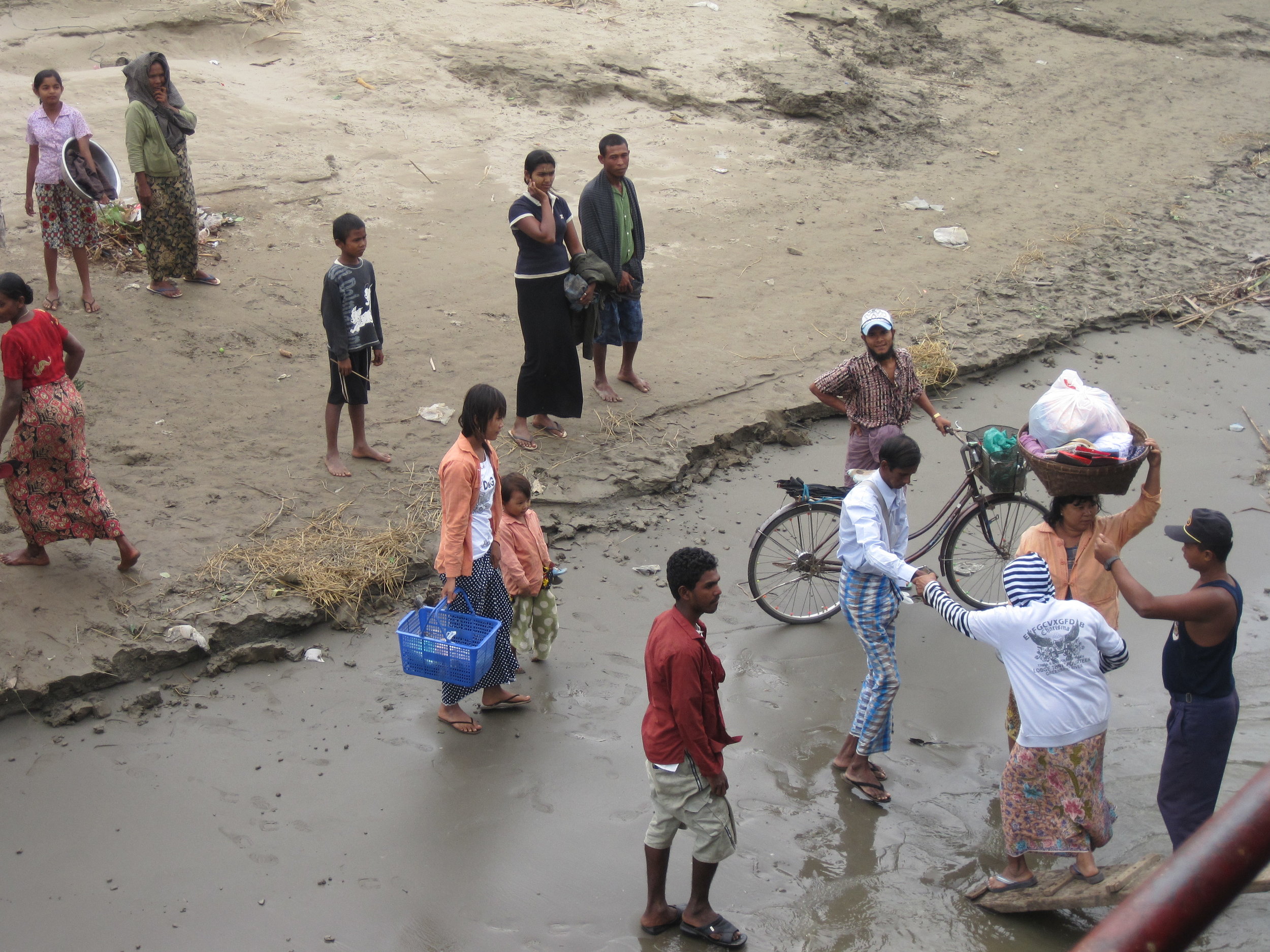
During the 12hr journey we stopped along the banks of four villages and watched as people and cargo carefully embarked and disembarked using a makeshift ladder that would haphazardly be anchored to the muddy slopes of the shore. The scenery was indeed beautiful but it was less about the terrain and natural splendour as it was about the village people excitedly waving from the shore, the animated personalities of the children of a family seated next to me and a sunset that ranks among the finest of what I have seen during my time away. Upon landing in Hpa-An, I had made the acquaintance of three other travellers who were lucky enough to have discovered this enchanting boat ride as well and we all found a place to stay in the only hostel in town (that’s how infrequent visitors are to this place). During our breakfast venture the next day, one of my fellow travellers asked me how I had discovered the boat ride and why I did it. My response described my meeting with the monk during sunrise upon a stupa in Bagan and how my decision was based entirely on his insightful suggestion. The look of awe and admiration was clearly illustrated as his wide eyed grin took hold of me in a full, contagious sweep. “So let me get this straight”, he started with a chuckle and then resumed, “you travelled all the way from Bagan, spending hours on buses, including an overnight in a bus station and then one short night in Mwalymine just to get on a boat...and all this because some monk on a stupa told you its the best scenery you’ll see in Myanmar?!”
I looked at the quizzical faces of my other companions and it was only then that I realized that not once through that entire journey did I really question the purpose of the adventure. It was born from an inspiring recommendation and I was merely carrying it out with a sense of normalcy that had come to shape my mind-set after a few months of travelling alone. I had gone to see Bagan and stumbled upon the pursuit of seeing something else. I was traveling for travels sake; I travel to go, to move and to be moved and that, I decided, is why I did it.

LEARNING TO SCUBA DIVE – KHOA TAO, THAILAND
Scuba diving has always been on my bucket list even though I never truly had any overzealous expectations of it…
Scuba diving has always been on my bucket list even though I never truly had any overzealous expectations of it. I suppose this was a result of knowing many people who have done it and seeming to think that all their stories melded in to one, very common experience. Even so, I did remain curious and was eager to give it a chance. While growing up, my father was always insistent that we try everything at least once. He would remind us that we had nothing to lose and everything to gain, no matter the result. It was a doctrine that I grew to arduously live by and it continues to play a defining role in the guiding principles of my life.
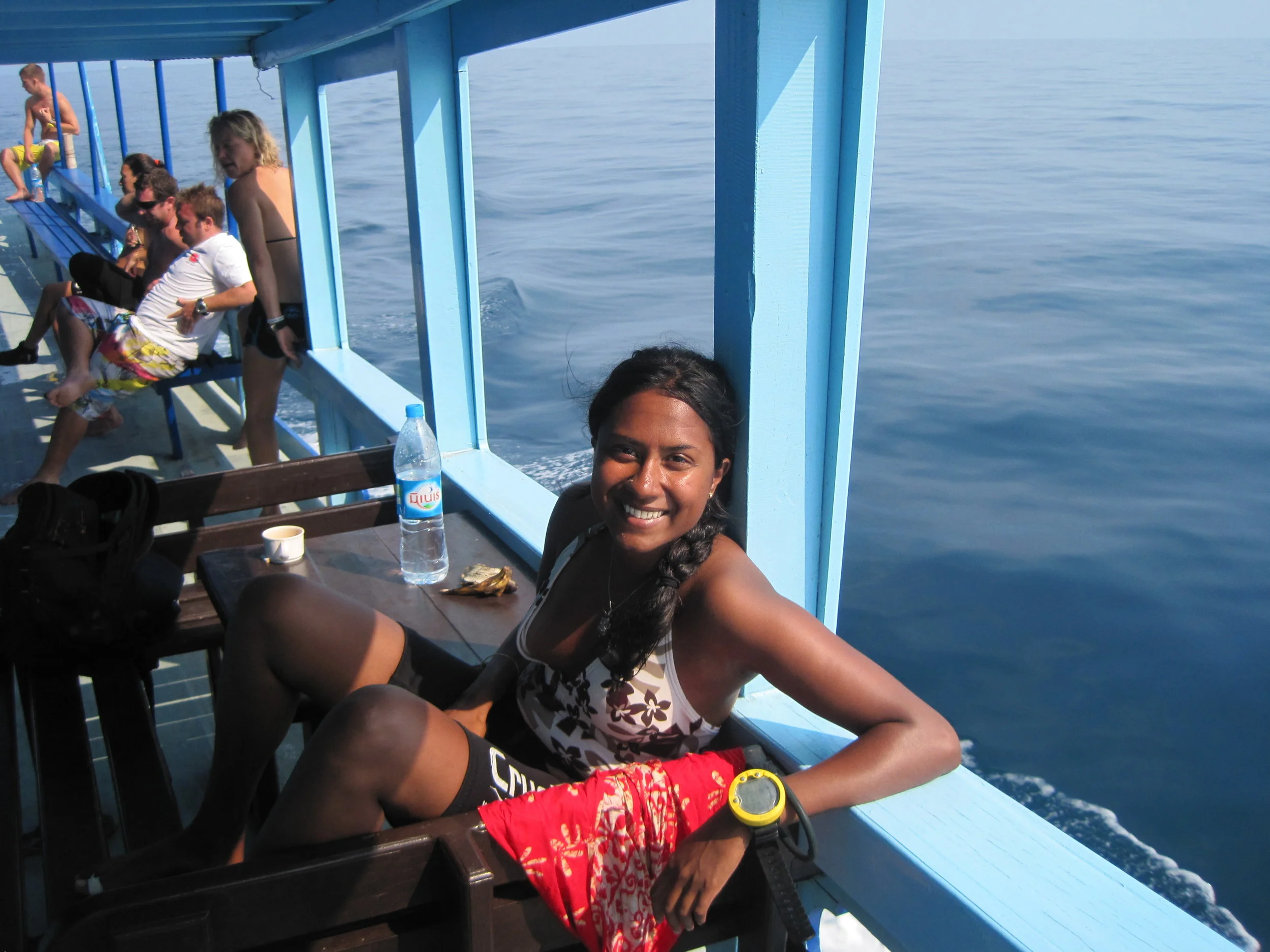
I was pleasantly surprised when I took to diving as passionately as I did. My instructor loved my beginner’s enthusiasm; every time I surfaced and took the regulator out of my mouth, I’d holler with excitement, asking everyone if they saw the enormous jellyfish or the circling school of barracudas. It took about four dives before I was completely hooked. At this point, diving had infiltrated my dreams and I’d wake up with a striking remembrance of swimming with turtles or maneuvering through systems of caves and crevices. Koh Tao had an addictive vibe itself, being a laid back island that mainly attracted divers and tourists looking for a cheery but reflective atmosphere. It was a bittersweet moment when I had completed my beginner’s course and started packing for my next jaunt in Ko Pangnan. I had become so infatuated with being and breathing underwater that I changed my travel plans to go back to Koh Tao to get my advanced certification.
I returned four days later, with a newly found taste for diving still vivid and fresh in my memory. When I found my instructor sitting at the bar in the diving school, he chuckled at my reappearance as if to say, “I knew you’d be back”. We immediately planned the advanced dives I would complete for the certification, which included extremely exhilarating buoyancy and night dives. Fueled by my growing fervor for my new hobby, I even managed to finish the entire lesson book that night over a heaping serving of pad thai. As I finished the last chapter and pushed the empty plate away, I looked around and realized I was in the midst of like-minded people who shared the same addiction for breathing underwater. I gave it a chance and found a passion for diving that flourished quite intensely and unexpectedly. It swept me off my feet and in to the colourful depths of the waters surrounding an island that will forever remain the setting for which I found a new, undying love.
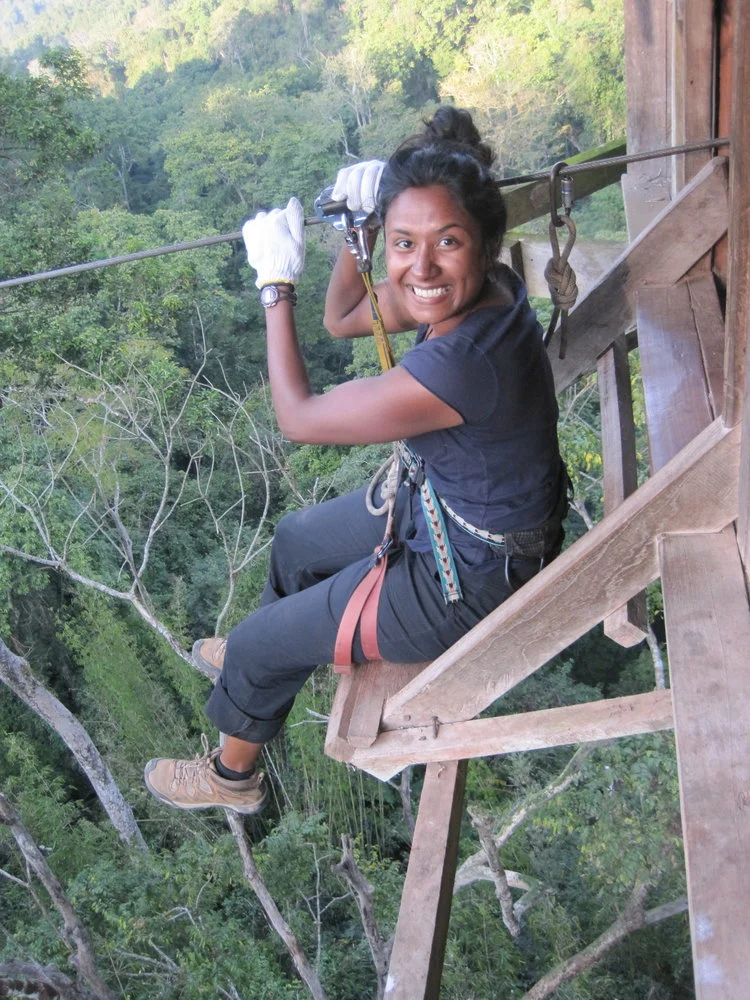
THE GIBBON EXPERIENCE – LAOS
I had a vested interest in The Gibbon Experience even before I got to Laos…
I had a vested interest in The Gibbon Experience even before I got to Laos. I initially heard about it from a friend who planned on doing it during his travels but never found the chance. Once I got to Southeast Asia, it presented itself time and again during conversations I had with other travelers in hostels, bars and long bus rides. Only a handful had actually done it and their stories had a contagious effect. I soon became infatuated with the idea of taking ownership of this experience. I developed a childlike obsession of finding out what all the fuss was about. By the time I had made my way up to Luang Prabang I had let the monetary constraint and lack of time convince me that it was not to be. However, sometimes the magic of travel avails and the freedom to do as you wish and when you wish, is enough to change your heart and mind at a whim. So it was with much ease that I booked the Gibbon Experience for the next departure date - which happened to be at 9am the next day.
I spent that night traveling by bus to Huay Xai, the Thailand/Laos border town, which sits peacefully on the banks of the Mekong River. I knew very little of the program at this point but figured that at least there would be some zip lining and Gibbons involved. The latter, it turned out, were nowhere to be found. In fact, other than the spectacular rain forest that surrounded us, there was not much wilderness to be seen in the ways of monkeys or any other exotic animals. So after the first few zip lines and some strenuous upward hikes, I started considering that perhaps this was to be a highly overrated experience and would not be worth compromising my sensitive budget. Then it happened. A 400m line that had me bolting over luscious canopy and strangling me of high-pitched screaming that usually accompanies such an adrenaline rush. And then it happened again. This time our line ended at the window of a tree house, sitting comfortably thirty meters off the forest floor and in the middle of a gaping hole of heavy vegetation. I always fantasized about having a tree house when I was younger and now here I was; zipping in and out of one that was outfitted with a bathroom, running water and had enough room to accommodate ten people comfortably. Wide-eyed and giddy with excitement, we committed ourselves to zipping circles around the tree house until nightfall. Spending our free time in a tree house was a different but equally rewarding experience. While surrounded closely by the wilderness, we ate meals that were made in a close by village and then zipped in, we shared exciting stories of our day and we got to know new friends. Still, my favourite moments took place in the morning. We would wake up in our sleeping bags and look out on to the vista as the rising sun shed light on all the fine details of the dense forest below us.
From my initial desire, to obsessing with the idea and then finally needing it for myself without any realistic evaluation – The Gibbon Experience had provoked a sense of puerile wanting that largely remained silent since my childhood. Our laughter echoed through the trees and ran along the zip lines. And in my own voice, I could hear that child – the one who sought adventure, dreamt endlessly and was determined to have it all. She was still very much alive.


KONG LO CAVE – LAOS
My mind was made up - I was going to Kong Lo cave…
My mind was made up - I was going to Kong Lo cave. It was located off the beaten path and although I had no idea of how I would execute the journey there, I was determined to not leave Laos without having visited it. I’m no expert when it comes to caves but the thought of boating through a 7km river in darkness and having the opportunity to see some impressive stalagmite creations was an idea I became utterly obsessed with. At the time I was traveling with Jeremy, a fellow-Canadian traveller, who I had befriended upon departing Si Phon Don Islands. I mentioned my ambitious plan to him and was overjoyed when he decided to accompany me.
I was not at all anticipating the difficulty of getting to the cave but as we rode multiple local buses and hitched a ride with a smoking monk and his Thai companions to the cave entrance, the idea started to become even more prized. We climbed in to the slender, canoe-like boat with a guide and boatman and entered the dark abyss in silence. We could only see the beams of our headlights scattering across the great mass of rock around us. Silence infiltrated but I could still hear the emptiness of the colossal, hollow cavity that we had entered and the rushing water below us. Upon entering the cave, my mental capacities had seemed to stagnate almost immediately and I really couldn’t place my emotions or thoughts. I was so utterly consumed by the experience of being completely displaced from anything that was remotely ordinary. It took me a while to ease in to the novelty, thrill and excitement of what was happening. We were moving through an immense space that seemed to have no limits and carried with it an uncertainty that frenzied my thoughts and emotions. As we moved along we had to stop once in a while where the water was too shallow and push the boat forward - this further intensified the experience. The stalagmite formations were far more extraordinary than I had anticipated. From floor to ceiling, they were truly a remarkable display of nature. They had a certain artistic merit that made it seem like I was at a gallery viewing an exhibit crafted by artists experimenting with the use of space and light.
I was overcome with grief when we finally neared the cave opening on the other side. It was as if I had been watching a fantastic movie and thinking through its entirety that I didn’t want it to end. We emerged from the cave to the most lush and breathtaking jungle I had seen thus far in Laos. Jeremy and I looked at each other with disbelief and in our smiles we silently acknowledged the magic that we had just experienced. He then made an inspiring suggestion for our return trip that would potentially generate a whole new appreciation of what lay within the cave. Since his current commitment of teaching English in Korea posed the threat of a drug test upon his return, it was left to me to decide whether I wanted to smoke the rest of the blunt I had with me. Off we went, gliding back in to the cave and already I was feeling the effects of a chilling and stimulating high. Everything I felt before was blown out of proportion and I started taking notice of things I had not seen before - whether they were actually there or not remains debatable. I chatted animatedly to myself throughout our entire journey, imagining that I was alone in that dark, twisted cave. I turned back to look at Jeremy as we approached the end and he grinned, amused by my altered state. “By far the best trip in Laos” I bellowed with excitement and started laughing before continuing, “in more ways than one!”
